Three Sacred Graves Beneath the Shrine of Imam Ali
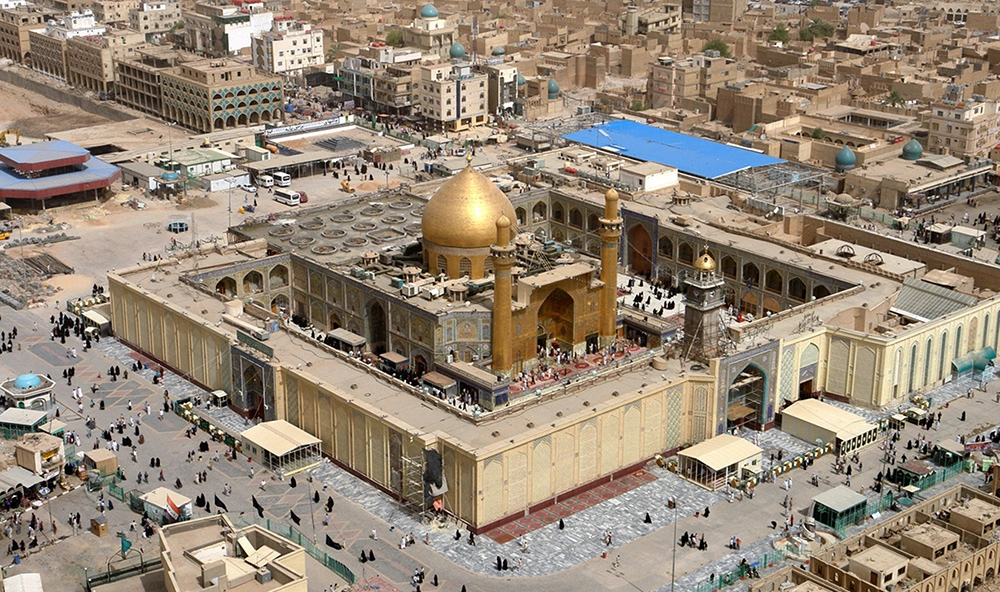
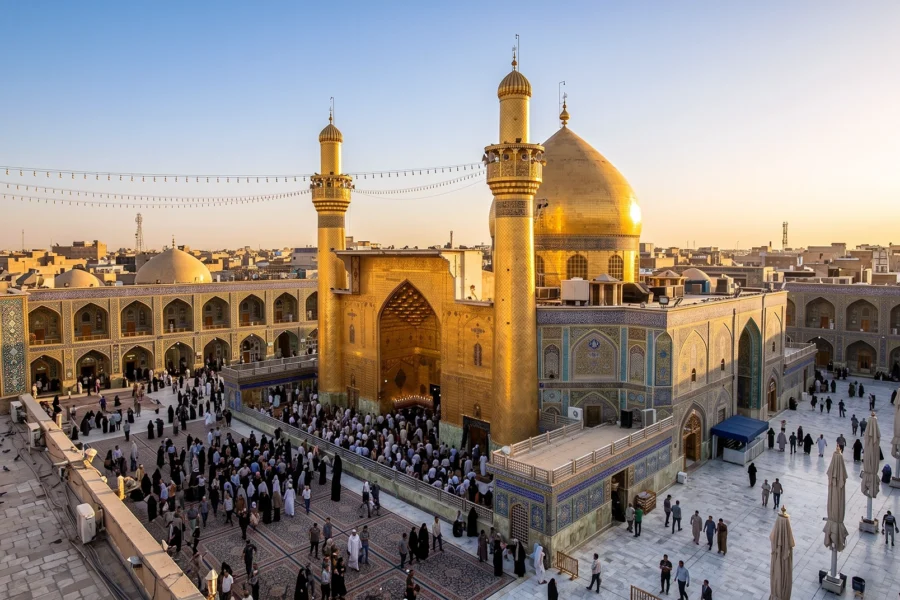
In the heart of Najaf al-Ashraf, the golden dome of the Shrine of Imam Ali marks one of the most revered places in Shia Islam. According to Shia traditions, this sacred land is associated not only with Imam Ali ibn Abi Talib, but also with Prophet Adam and Prophet Noah.
This gives the site a remarkable connection to different chapters of sacred history—from the first human being and prophet to the Prophet Muhammad’s family and Imam Ali.
But before the shrine became one of the world’s most important pilgrimage destinations, the location of Imam Ali’s grave was deliberately kept secret for many years.
The Secret Burial of Imam Ali
Imam Ali was martyred in Kufa in 40 AH (661 CE) after being struck with a poisoned sword while praying in the Mosque of Kufa.
According to Shia historical traditions, Imam Ali had instructed that his burial place be kept hidden. Following his death, his sons Imam Hasan and Imam Husayn, together with Abdullah ibn Ja’far, carried out his burial secretly in the area known as al-Ghari, in what is now Najaf.
The decision to conceal his grave was not without reason. His family feared that enemies, including the Khawarij and the Umayyads, might desecrate his body or grave. Keeping the location secret also helped prevent further conflict and bloodshed among Muslims.
The grave therefore remained hidden from the general public for many years.
Why Was the Grave Kept Hidden?
The secrecy surrounding Imam Ali’s burial was intended as protection.
The political and religious tensions of the period were extremely intense. Imam Ali had faced powerful enemies during his lifetime, and his death did not necessarily mean that the danger surrounding him had disappeared.
His family therefore chose a remote burial place and concealed its location.
According to the historical account, the burial site was in al-Ghari, approximately two leagues from Kufa, in the area that would later become Najaf.
This secrecy explains an important part of the shrine’s history: the sacred site that millions visit today was once known only to a very small number of people.
The Grave Revealed to Imam Zayn al-Abidin
Although the grave was hidden from the general population, Shia traditions preserve an important account indicating that its location was known to certain members of the Ahl al-Bayt and their close followers.
One of the most significant accounts comes from Abu Hamza al-Thumali, a companion associated with Imam Zayn al-Abidin, the fourth Imam.
According to the narration, when Imam Zayn al-Abidin traveled to Kufa, Abu Hamza asked him about his visit. The Imam later asked him:
“Would you like to visit my grandfather, Ali ibn Abi Talib?”
Abu Hamza agreed.
The two then traveled toward the area known as al-Ghari, in the desert of Najaf. When they reached the location, Imam Zayn al-Abidin identified the place as the grave of his grandfather, Imam Ali. He then performed the ziyarat of Imam Ali before departing.
This account is particularly significant because it indicates that the location was known to at least some trusted followers before it was publicly revealed during the time of Imam Ja’far al-Sadiq.
The Sacred Land of Al-Ghari
The location described in these traditions was known as al-Ghari or al-Ghariyyayn.
At the time, it was not the magnificent urban center that Najaf would eventually become. It was a relatively remote area outside Kufa.
According to the account of Abu Hamza, Imam Zayn al-Abidin arrived at a white area of land and identified it as the resting place of Imam Ali. He then performed the appropriate visitation prayers and returned toward Medina.
Over subsequent generations, this once-hidden location would develop into the spiritual heart of Najaf.
When Was Imam Ali’s Grave Revealed to the Public?
The commonly transmitted account places the public revelation of Imam Ali’s grave during the lifetime of Imam Ja’far al-Sadiq, following the fall of the Umayyad dynasty in 132 AH.
Some historical accounts associate the public disclosure with the early Abbasid period, mentioning al-Saffah or al-Mansur. The exact political circumstances and date are not established with complete certainty, and different historical sources give different details.
What is significant is that the grave was no longer kept entirely secret.
The location that had once been known only to the Prophet’s family and a small circle of their followers gradually became known to the wider Shia community.
Imam Ja’far al-Sadiq and the Shrine
Imam Ja’far al-Sadiq holds a particularly important place in the history of the shrine.
Shia traditions preserve numerous accounts of his visits to the grave of Imam Ali and his teachings about the sacredness of Najaf.
By his time, the political circumstances had changed significantly. The Umayyad dynasty had fallen, and the grave could be identified more openly.
The revelation of the location transformed al-Ghari from a hidden burial place into a destination of pilgrimage and remembrance.
The Resting Place of Prophet Adam
The sacred significance of Najaf extends beyond Imam Ali.
According to Shia narrations, Prophet Adam, the first human being and prophet, is also associated with this sacred land.
One tradition attributed to Imam Ja’far al-Sadiq describes Prophet Noah carrying the remains of Prophet Adam after the Flood and burying him in the land of Najaf.
This tradition gives Najaf a connection reaching back to the very beginning of human history.
The Resting Place of Prophet Noah
Prophet Noah is also associated with Najaf in Shia traditions.
Some narrations identify the land behind Kufa as the burial place of Noah, while others connect him directly with the burial of Adam in Najaf.
Thus, according to these traditions, the sacred ground surrounding Imam Ali’s resting place carries the memory of three extraordinary figures:
Adam — the first prophet and father of humanity.
Noah — the prophet of the Flood and a symbol of perseverance.
Ali — the Imam whose life embodied faith, courage, knowledge, and justice.
Three Sacred Names, One Sacred Land
The association of these three figures gives Najaf an extraordinary place in Shia spiritual tradition.
Adam represents the beginning of humanity.
Noah represents perseverance in the face of overwhelming opposition.
Imam Ali represents the continuation of divine guidance through the Ahl al-Bayt, according to Shia belief.
Their association with the same sacred land creates a remarkable spiritual connection spanning thousands of years.
Are All Three Graves Inside the Zarih?
This question deserves a careful distinction.
Shia traditions associate the resting places of Imam Ali, Prophet Adam, and Prophet Noah with the sacred site in Najaf. Some devotional descriptions speak of their graves as being together at the site of Imam Ali’s shrine.
However, this should not necessarily be understood to mean that visitors can physically identify three separate graves directly beneath the modern zarih.
The historical and devotional sources establish an association between these sacred burial places and the land of Najaf, while the exact physical arrangement of the graves beneath the present shrine cannot be established with the same certainty.
For an accurate historical presentation, it is therefore better to describe the site as the sacred burial place of Imam Ali, traditionally associated with the resting places of Adam and Noah.
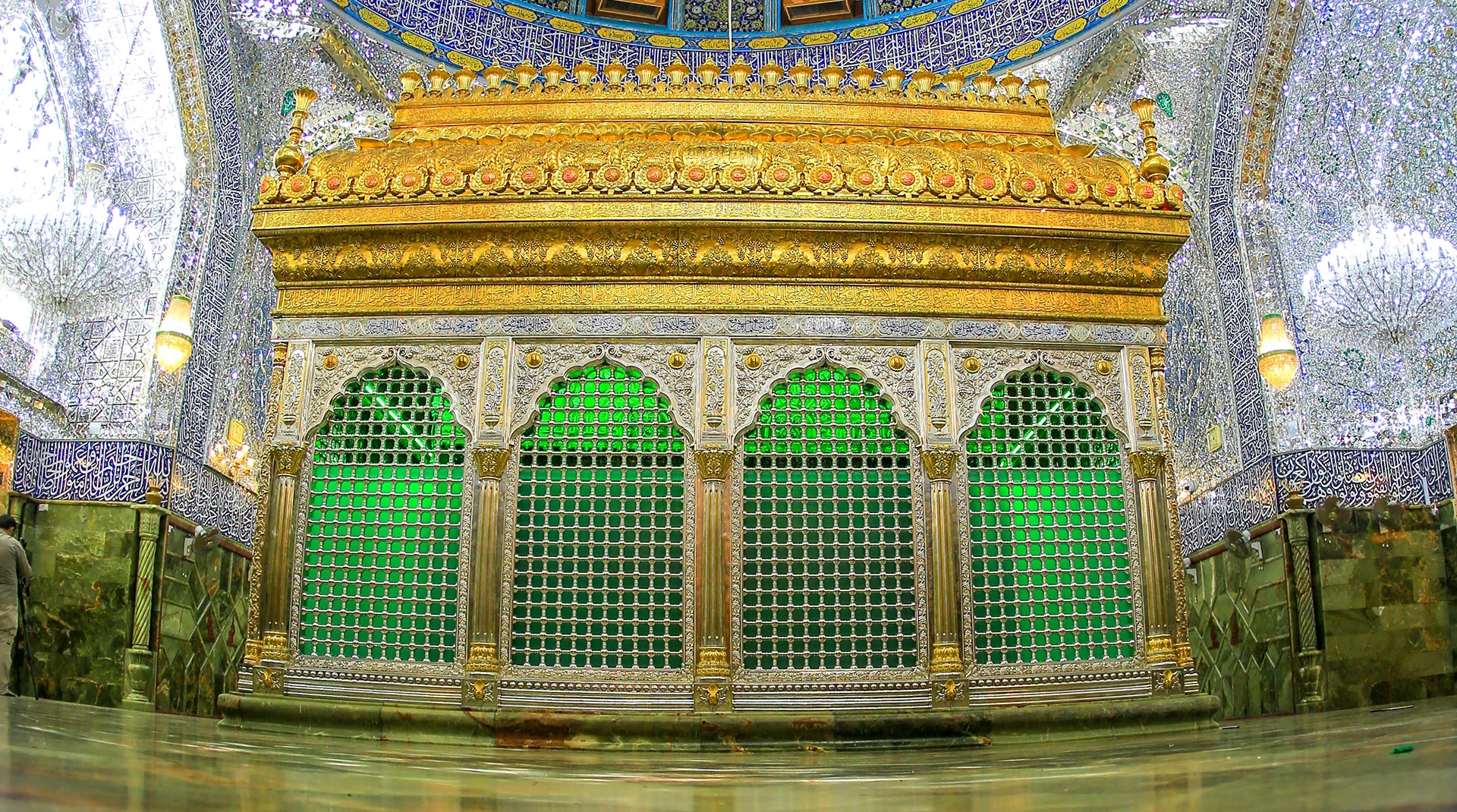
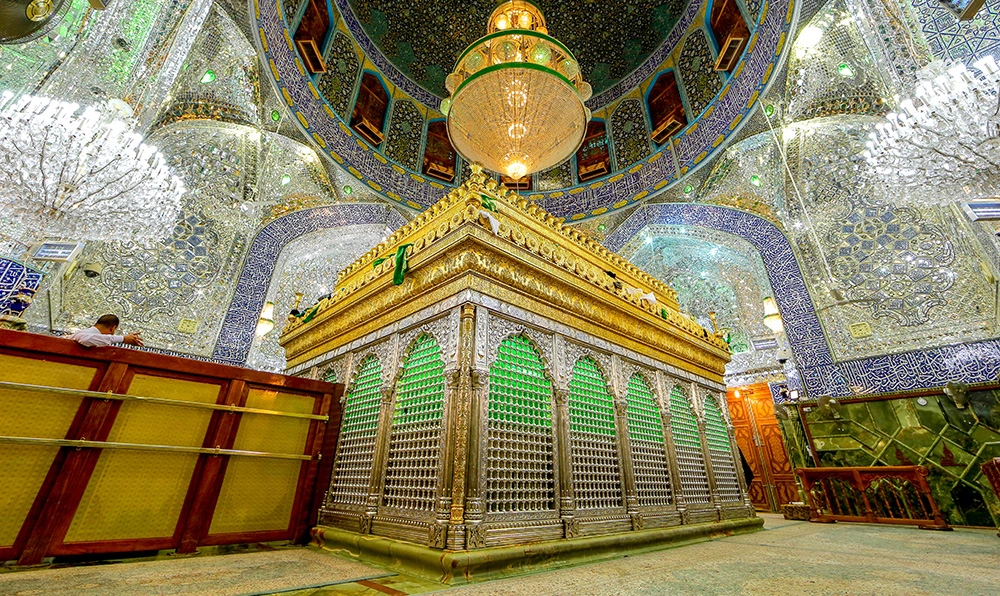
The Zarih of Imam Ali
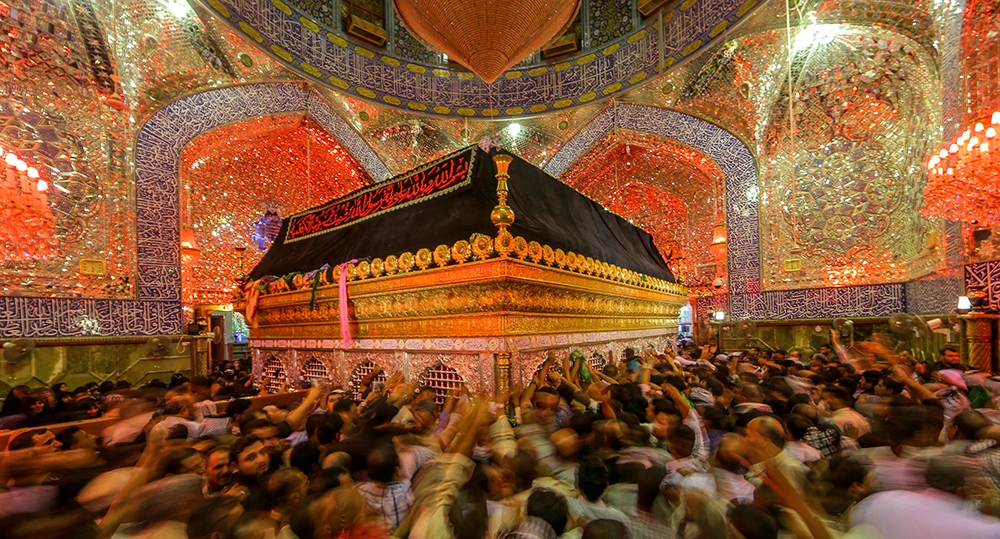
Today, pilgrims gather around the magnificent zarih of Imam Ali to offer prayers, recite ziyarat, and remember his life.
The atmosphere of the shrine reflects centuries of devotion. What was once a hidden grave in a remote area outside Kufa has become one of the most recognizable and revered sanctuaries in the Islamic world.
The journey from a concealed burial site to a magnificent shrine is itself an extraordinary chapter in the history of Najaf.
The history of Imam Ali’s burial carries a powerful message.
After his martyrdom, his family did not know whether his enemies would respect his grave. They therefore protected his resting place through secrecy.
For generations, only a select circle knew where he was buried.
According to the narration of Abu Hamza al-Thumali, Imam Zayn al-Abidin later personally revealed the location to him. Eventually, during the time of Imam Ja’far al-Sadiq and the early Abbasid period, the location became known more widely.
Centuries later, that same location would become the center of Najaf and one of the most important pilgrimage sites for Shia Muslims.
A Legacy That Could Not Be Hidden
The story of Imam Ali’s grave is ultimately a story of remembrance.
His enemies may have caused his burial place to be hidden, but they could not erase his legacy.
The location that was once concealed in the desert became a sanctuary visited by millions. The quiet burial ground of al-Ghari developed into the magnificent Shrine of Imam Ali, surrounded by the religious and scholarly life of Najaf.
And according to Shia tradition, this sacred land also carries the memory of Prophet Adam and Prophet Noah, connecting the shrine with the earliest chapters of human history.
For years, the grave of Imam Ali was hidden to protect it from those who sought to dishonor him. Today, beneath the golden dome of Najaf, that once-hidden resting place stands as a symbol of a legacy that could never be concealed.
In the heart of Najaf stands the sacred shrine of Imam Ali, a place of prayer, remembrance, and deep devotion. For millions of pilgrims, its golden dome represents a spiritual home where the heart finds peace.

 Shrine & Ziyarat